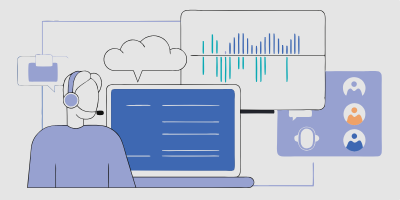
AI for agile standups brings new clarity to daily check-ins by generating accurate transcripts, tracking blockers, and reinforcing shared goals. While agile ceremonies aim to keep teams aligned, standups often become rushed or unevenly documented. As teams grow distributed, asynchronous, or cross-functional, it becomes harder to maintain shared understanding. That’s where transcription and AI summarization step in—not as a replacement, but as a smart support layer.

In this article, we explore how AI enhances daily standups, improves alignment, and keeps teams focused. With reliable records and context-rich insights, agile teams can finally close the gap between words and action.
Why Agile Standups Lose Their Impact Over Time
Daily standups are meant to surface blockers and clarify priorities. Moreover, yet, over time, these meetings can feel repetitive or lose purpose. However, some team members tune out, others dominate the discussion, and many forget what was even said. Therefore, without structure or recall, updates often go undocumented, especially when no one is taking notes.
Consequently, team alignment weakens. Missed details create confusion around ownership. Blockers linger longer than they should. In addition, leaders try to follow progress but often rely on secondhand updates.
Premier Agile highlights how AI tools now assist Scrum Masters by structuring and summarizing spoken updates into shareable insights, as explained in this article. These systems help teams cut through noise and focus on true impediments and priorities.. These systems help teams cut through noise and focus on true impediments and priorities.
The Role of AI in Structuring Standup Outputs
Instead of relying on memory or fragmented tools, teams can use agile meeting transcripts to capture the exact wording of each update. AI models then process these transcripts to identify blockers, updates, and ownership in real time.
More importantly, an AI daily scrum assistant doesn’t just transcribe. It tags each input by speaker, links it to sprint goals, and creates short summaries. This enables engineering leads and product owners to review the day’s standup in under two minutes.
Summarly’s article on how to identify your ideal communication audience explains how structured feedback improves targeting, which applies equally to standup clarity. When used consistently, these summaries become searchable documentation. They eliminate repeated questions, reinforce accountability, and reduce the mental load of keeping track of every detail.
1. Track Agile Blockers More Reliably
One of the most frustrating inefficiencies in agile is losing track of repeated blockers. Team members mention a technical issue in one standup, then again two days later—with no resolution.
Agile blockers tracking with AI reduces that repetition. The system detects recurring mentions and notifies relevant stakeholders automatically. In distributed teams, this reduces the burden on the Scrum Master and ensures follow-through.
According to Forbes’ piece AI Meets Agile: Transforming Project Management, integrating AI into agile workflows helps teams act faster on blockers and align more clearly on goals.
2. Improve Team Alignment with Transcribed Recaps
In addition, clear records help distributed teams stay in sync. As a result, with standup summary tool support, everyone—from developers to leadership—can access the same data.
Instead of relying on secondhand status updates, teams use transcripts and recaps to clarify exactly what was said. This creates a more consistent understanding of sprint priorities, timelines, and risks.
Team alignment in agile depends on a shared understanding of progress. AI builds that understanding automatically.
3. Automate Follow-Ups and Reminders
AI doesn’t just record what happened. It reminds the team what needs to happen next. Many teams now configure their tools to send automated Slack or email updates after each standup.
These updates can include flagged blockers, owners of key tasks, and links to sprint goals. By automating this layer, teams avoid manual follow-ups and reduce communication gaps.
Moreover, AI can detect gaps or lack of progress in certain areas, prompting follow-up before an issue escalates.
4. Create a Central Source of Sprint Truth
As a result, Scrum Masters and team leads often juggle multiple channels to compile updates—Jira, Slack, Confluence, verbal reports. Moreover, transcribed standups allow them to consolidate these inputs into one view.
This view becomes the backbone of sprint retrospectives and planning. Instead of asking, “What happened last week?”, teams review summaries that reflect reality, not memory.
AI for agile standups transforms check-ins into living documentation. This supports faster decisions and stronger retrospectives.
Summarly’s article Why Some People Always Win illustrates how systems thinking and small behavioral feedback loops can compound success—a concept directly applicable to small daily meetings.
5. Preserve Context Without Increasing Overhead
The best AI systems operate quietly in the background. They capture conversations without forcing behavior change. Team members still speak naturally. The AI handles the rest.
This approach preserves nuance and tone. However, it captures humor, stress, concern—the soft data behind team health. Therefore, unlike rigid dashboards, transcripts show how people actually communicate.
As organizations grow, they need tools that scale communication without adding process. AI achieves that balance.
Shared Understanding Is Built, Not Assumed
AI for agile standups helps teams remember, align, and act. By turning casual check-ins into consistent outputs, AI gives agile teams the structure they need to move fast without missing context.
As remote work continues and teams grow, shared understanding becomes harder to achieve. AI makes it easier—quietly, reliably, and without friction.