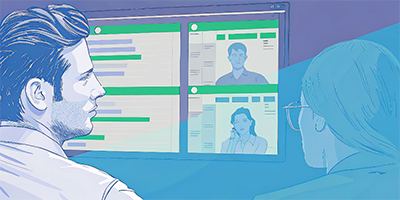
AI note taker for psychologist is redefining how therapists conduct and document one-to-one online sessions. As therapy increasingly moves online, professionals face growing pressure to balance empathy with documentation. However, AI changes this balance. Instead of dividing attention between the client and notes, psychologists can stay fully present while automation handles routine tasks.
At the same time, this shift reflects a broader transformation toward digital productivity, smart work, and automation across knowledge-based professions. Therefore, understanding how to integrate AI note-taking into therapy is no longer optional but strategic.
Why documentation is a bottleneck in therapy
The hidden cost of manual notes
Psychologists often spend hours writing session notes after each appointment. While this process is necessary, it creates a hidden workload that accumulates throughout the day. As a result, therapists finish their sessions mentally exhausted but still need to complete documentation. This reduces time for reflection, supervision, and emotional recovery.
Moreover, manual documentation introduces inconsistency. Notes depend heavily on memory, which is not always reliable after multiple sessions. In addition, fatigue affects how much detail is recorded. Under time pressure, therapists may simplify or omit important nuances. Consequently, the quality of documentation varies from session to session.
Furthermore, this process increases cognitive load. Psychologists must remember key details while also being fully present during conversations. This creates a constant internal tension between listening and recording. Over time, this dual focus leads to mental fatigue and reduced attention during sessions.
As a result, even experienced therapists struggle to maintain consistent documentation standards. Over weeks and months, this inconsistency affects both efficiency and clinical outcomes. Inaccurate or incomplete notes can limit the ability to track progress, identify patterns, and make informed decisions.
The shift toward digital productivity
Today, digital productivity defines how professionals manage time and cognitive load. According to McKinsey research, generative AI can significantly increase productivity and even reshape how work is structured across industries .
This insight is especially relevant in therapy. Psychologists operate in a knowledge-intensive environment, where attention and memory are critical resources. Therefore, automating note-taking directly improves performance.
How ai note taker for psychologist works in practice
Real-time capture of sessions
An ai note taker for psychologist listens during sessions and converts speech into structured notes. At the same time, it identifies key themes, emotional cues, and patterns.
As a result, therapists no longer need to split attention. They remain fully engaged with the client while the system processes information in the background.
Structured summaries instead of raw transcripts
Unlike simple transcription tools, AI organizes information into meaningful categories. These include emotional states, behavioral patterns, and action points.
Therefore, reviewing a session becomes faster and more insightful. Instead of reading full transcripts, psychologists work with structured summaries.
Integration into daily routines
AI note-taking fits naturally into daily routines. After each session, documentation is already prepared. Consequently, therapists avoid backlog and reduce administrative stress.
This is where automation meets personalized productivity. The tool adapts to the workflow rather than disrupting it.
Key benefits for psychologists
Improved time management
Time management is one of the most valuable benefits. AI reduces hours of manual documentation to minutes of review.
Research published in The Quarterly Journal of Economics shows that AI assistance can increase worker productivity by about 15% on average . In therapy, this translates directly into more available time and reduced burnout.
Higher efficiency through smart work
Efficiency is not about working longer. Instead, it is about removing unnecessary effort. AI enables smart work by automating repetitive cognitive tasks.
As a result, psychologists can focus on interpretation, empathy, and strategy rather than documentation.
Better client connection
When therapists stop typing during sessions, they become more present. Eye contact improves. Listening deepens. Clients feel understood.
Therefore, AI indirectly enhances therapeutic outcomes by strengthening human connection.
Consistency and quality
AI ensures consistent documentation across sessions. Unlike manual notes, it does not depend on memory or mood.
Consequently, psychologists maintain higher quality records, which improves both clinical work and reporting.
Best practices for implementation
Keep control over the process
AI should support clinical decisions, not replace them. Therefore, therapists must treat generated notes as a draft rather than a final document. Even the most advanced systems can miss context, nuance, or subtle emotional cues. For this reason, reviewing and refining notes remains an essential step.
Moreover, psychologists are responsible for interpretation, not the tool. AI can structure information, but it cannot fully understand the therapeutic relationship or clinical complexity. Consequently, professionals should validate key insights before relying on them in treatment planning.
In addition, maintaining control over the process reinforces professional confidence. Therapists who actively review AI-generated content develop trust in the system without becoming dependent on it. This balance ensures both efficiency and clinical integrity.
Maintain ethical standards
Confidentiality remains a fundamental principle in psychological practice. Therefore, therapists must ensure that any AI tool they use complies with data protection standards and uses secure encryption. Choosing the right platform is not only a technical decision but also an ethical responsibility.
At the same time, informed consent is essential. Clients should clearly understand how their data is recorded, processed, and stored. This transparency strengthens trust and prevents misunderstandings. Moreover, it aligns with professional and legal requirements in most jurisdictions.
Additionally, psychologists should establish clear internal guidelines for AI usage. For example, defining what data can be stored, how long it is retained, and who has access to it. As a result, ethical standards remain consistent across all sessions.
Adapt the tool to your workflow
Every therapist works differently. Some prefer detailed notes, while others prefer concise summaries. Therefore, the ai note taker for psychologist should be customized. This flexibility is key to long-term adoption.
Real-world use cases in one-to-one sessions
Capturing emotional dynamics
AI can identify patterns in tone, pauses, and language. As a result, therapists gain deeper insights into emotional states. This supports more accurate diagnosis and intervention planning.
Tracking progress over time
Because AI structures data, it becomes easier to track progress across sessions. Trends emerge more clearly. Consequently, therapists make better long-term decisions.
Supporting supervision and compliance
AI-generated notes simplify supervision and reporting. Documentation becomes standardized and accessible. This reduces administrative burden while maintaining professional standards.
AI, automation, and personalized productivity
Reducing cognitive overload
Therapists manage complex emotional and cognitive tasks. However, AI reduces mental load by handling repetitive processes. As a result, psychologists maintain better focus and emotional energy.
Transforming daily routines
AI integrates into daily routines without friction. Notes are ready immediately. No backlog accumulates. This creates a smoother workflow and more predictable schedule.
Challenges and limitations
Privacy and security concerns
Data protection is essential. Therefore, therapists must choose tools with strong encryption and compliance standards. Ignoring this can damage trust and create legal risks.
Learning curve
Some psychologists hesitate to adopt AI. However, most modern tools are intuitive. With minimal onboarding, they become part of everyday practice.
Maintaining human connection
Technology should not interfere with therapy. Therefore, AI must remain invisible during sessions. When used correctly, it enhances rather than replaces human interaction.
AI note taker for psychologist is not just a convenience tool. It is a fundamental shift in how therapy is conducted and documented. By integrating AI into one-to-one sessions, psychologists improve efficiency, reduce stress, and enhance client relationships.
Moreover, this transformation aligns with broader trends in AI, automation, and digital productivity. However, success depends on thoughtful implementation and ethical use.
Ultimately, those who adopt AI tools early will build more sustainable, effective, and modern practices.